
The archive
A short history of pomade, from powder to the part
An eighteenth-century hairdresser, a perfumer’s notebook and a museum jar explain how a scented dressing became a styling product.
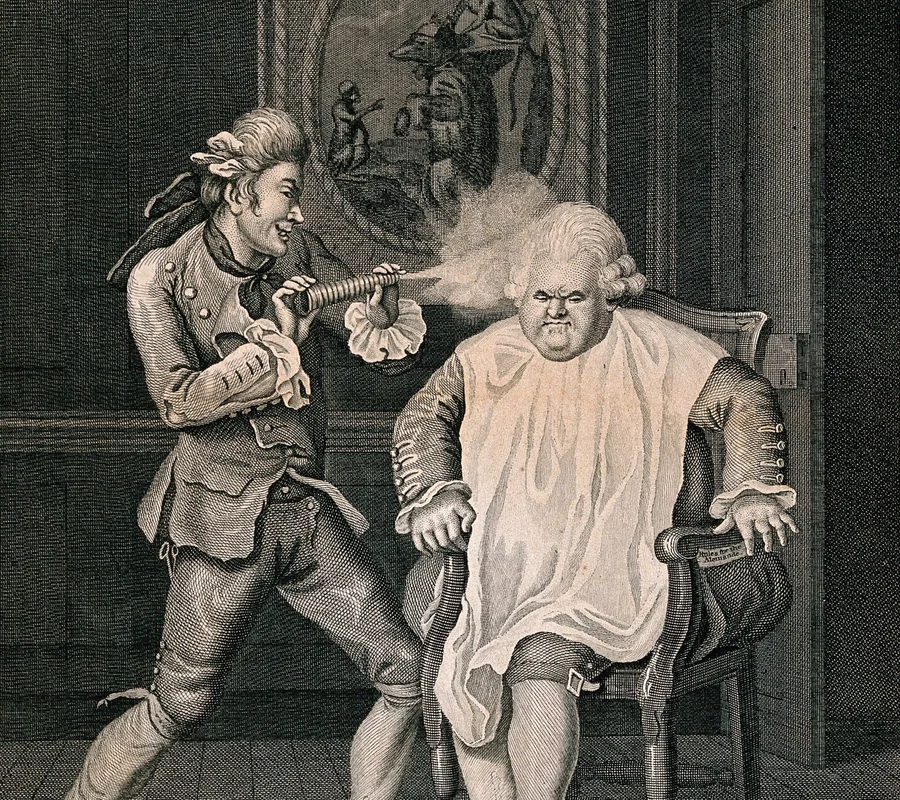
A problem with hair powder
In 1770, London hairdresser David Ritchie recorded a practical complaint. Some clients disliked wearing pomatum with their hair powder. From the dresser’s side of the chair, dry hair shed the powder and left strands loose. Mixing the dressing and powder helped him keep an elaborate style together.
That account gives pomatum a specific job in a particular place and period. It also leaves room for disagreement. Some of the people wearing those powdered styles would quite happily have skipped the dressing.
What went into the dressing
The nineteenth-century perfumer G. W. Septimus Piesse described pomatums built around fats that carried scent. He linked the name to apples and recounted an older preparation in which fruit perfumed the fatty base. His book also describes other scented preparations. One recipe cannot stand for every jar sold as pomatum.
A jar catalogued by the Smithsonian as Ox Marrow Pomade carries the name of another material used in hairdressing. That object and Piesse’s text give us two kinds of evidence, a product that survived and a maker’s account of the trade. Neither establishes who invented the first hair pomade.
What survives in the morning ritual
You can recognise the old dresser’s gesture when you use a modern jar. Spread a little through the hair and guide it into shape. Today the word covers different kinds of product. Our strong-hold Pomade is water-soluble and made for a comb-defined finish.
To try the modern finish, draw a part while the hair is clean. Distribute a thin film, then comb the top in one direction. When you read a pomade label, check how the maker describes its hold and wash-out. The history explains the name. The label tells you how that particular jar fits your day.